Nashville Criminal Justice Lawyer Charged? Fight Back.
Austin Tomlinson is a criminal justice lawyer and military veteran who defends people charged with crimes in Nashville, Davidson County and across Middle Tennessee. One lawyer. Your case. Start to finish.
Free Case Review. If Austin is in court or with a client, the intake line takes your information and he calls you back as soon as he is free.

60 Google reviews
Criminal defense. That is Austin's expertise.
You work directly with Austin, never a case manager
Veteran attorney who defends veterans and civilians
What Does a Criminal Justice Lawyer Do?
A criminal justice lawyer, also called a criminal justice attorney or criminal defense attorney, represents people accused of crimes at every stage of a case: the arrest, the bond hearing, discovery, plea negotiation, motions to suppress and trial. In Tennessee that means challenging how the State gathered its evidence, protecting your constitutional rights, and working toward dismissal, diversion or the lightest resolution the facts allow.
An arrest is an accusation. It is not a conviction. But a charge in Davidson County can put your job, your driver license, your housing, your firearm rights and your family in play all at once, and the State started building its case the day you were booked.
Patriot Law is the office of Austin Tomlinson, a Nashville criminal justice attorney and military veteran who takes a limited number of cases so each one gets real attention. From the first phone call to the final court date you deal with the attorney who is actually standing next to you at the podium. Not an assistant, not a rotating team, not a call center.
Criminal Charges Austin Defends in Nashville and Davidson County
Every charge below carries consequences that outlast the case itself. Pick your charge to see what the State has to prove and where those cases break down.
DUI & DWI Defense
Field sobriety tests, breath and blood results, implied consent, and license revocation.
DUI Defense →Drug Charges
Simple possession through trafficking, including Schedule VI and THC cases.
Drug Defense →Assault & Battery
Simple and aggravated assault, self-defense claims, and mutual-combat situations.
Assault Defense →Domestic Violence
Orders of protection, no-contact conditions, custody fallout, and gun-rights loss.
DV Defense →Theft & Burglary
Shoplifting, theft by value tier, aggravated burglary, and property felonies.
Theft Defense →Sex Crimes
False accusations, registry exposure, and cases built on one person's word.
Sex Crime Defense →White Collar Crime
Fraud, embezzlement, and pre-indictment defense while the investigation is still open.
White Collar Defense →Arson
Fire-origin science, cause-and-origin experts, and insurance-driven investigations.
Arson Defense →Veteran Criminal Justice Lawyer for Tennessee Service Members
Austin Tomlinson served this country before he ever stood in a Tennessee courtroom. He knows what a deployment does to a person, what the transition home actually looks like, and why a service record matters long after the uniform comes off.
That background is not a marketing line. In a criminal case it is leverage. A prosecutor who understands your service history, your VA records and your combat exposure sees a different case than the one on the arrest report. Getting that picture in front of the right people, early, is often what separates a conviction from a dismissal or a diversion.
For fiscal year 2024 to 2025 the Davidson County Veterans Treatment Court reported 90% of its graduates did not re-offend within one year of completing the program, and 41 cases referred with 17 accepted, according to the General Sessions Court of Metropolitan Nashville and Davidson County annual report. Past results in other cases do not predict what happens in yours.
You did not stop being a soldier the day you got out. You should not have to explain that to your own attorney. Austin Tomlinson, Attorney & VeteranVeterans Defense Options
Can a Service Connection Change the Outcome?
A documented service-connected condition carries real weight with a prosecutor and a judge, and it can open the door to a treatment track instead of a conviction. It has to be raised early, with records behind it.
Who Qualifies for Davidson County Veterans Treatment Court?
Nashville runs a dedicated Veterans Treatment Court that pairs eligible veterans with treatment and a veteran mentor instead of jail. Austin handles the screening, the referral and the paperwork.
How a Conviction Affects VA Benefits and Security Clearance
A plea that looks minor in General Sessions can cost you a security clearance, a VA benefit, a CDL or your gun rights. Austin maps the collateral damage before you agree to anything.
How PTSD and TBI Factor Into Sentencing
Service-connected trauma is not an excuse and Austin never presents it as one. It is context, and it belongs in front of the prosecutor and the judge.
Why Clients Hire Austin Tomlinson
The Attorney You Hire Is The Attorney You Get
No handoff to a junior associate the week before trial. Austin answers your calls, negotiates your case and stands next to you at the podium.
Straight Answers, Including The Bad Ones
You will hear what the State actually has, what your realistic outcomes are, and what it will cost. No one gets talked into false confidence here.
Flat Fees, Quoted Up Front
You know the number before you hire him. No surprise invoices in the middle of a case you cannot afford to walk away from.
Austin Knows These Courtrooms
Davidson County General Sessions and Criminal Court have their own rhythms, prosecutors and judges. Local knowledge changes what is possible.
Built To Try Cases
Most cases resolve. The ones that do not need a lawyer who prepared for trial from day one, and prosecutors who know it.
Veteran-Owned And Veteran-Focused
Service members, veterans and their families get an attorney who already speaks the language and knows the systems.
What Happens After You Hire a Criminal Defense Attorney
Step 1: Free, Confidential Case Review
Call or send a message any hour. Tell Austin what you were charged with and what happened. Nothing you say leaves this office.
Step 2: Austin Pulls and Reads the State's File
Discovery, body cam, lab results, dispatch logs, witness statements. Austin reads all of it and tells you exactly where the case is weak.
Step 3: Austin Builds the Strategy and Executes It
Motion to suppress, diversion, negotiated resolution or trial. You approve the plan. Then he goes and does it.
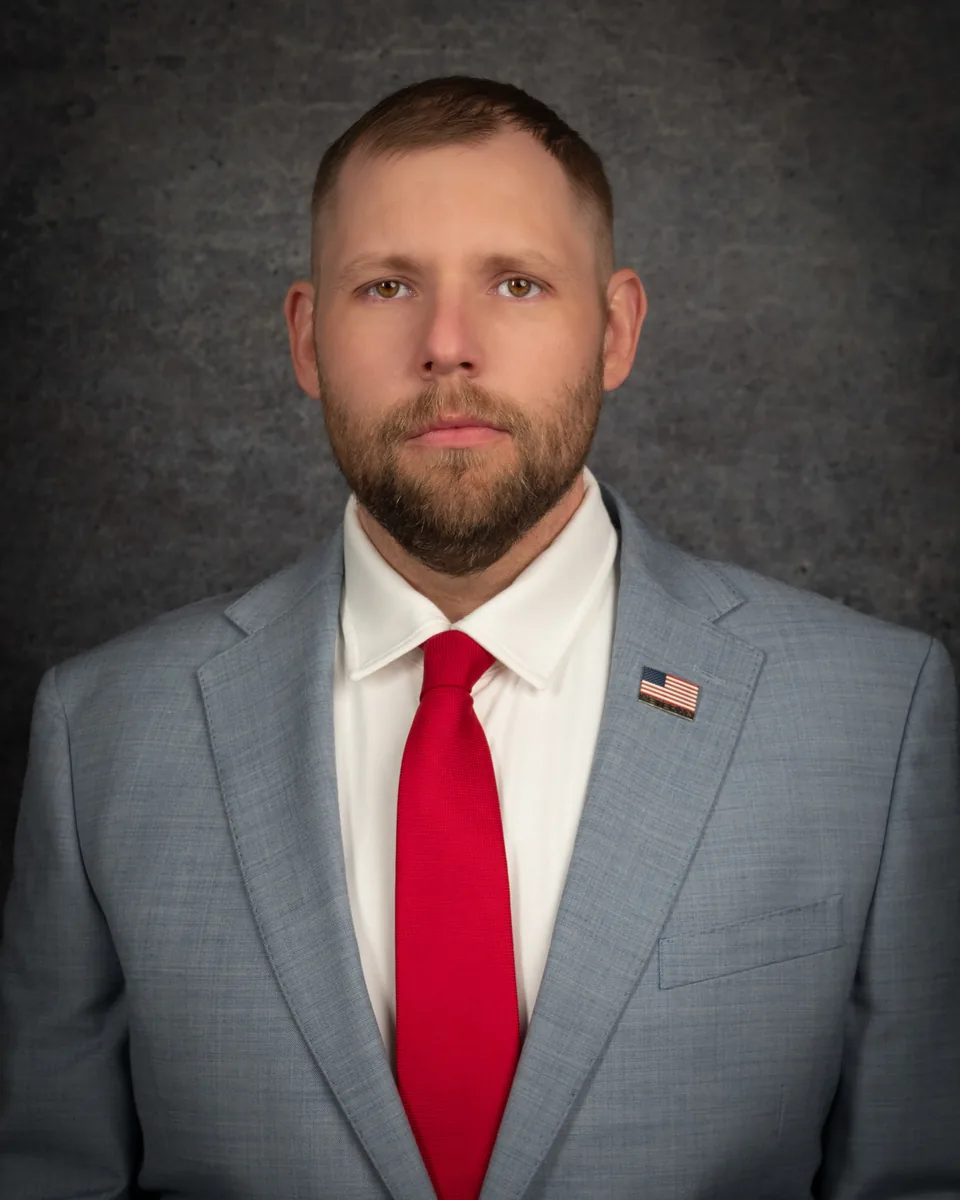
About Austin Tomlinson, Nashville Criminal Justice Lawyer
Austin founded Patriot Law to do one thing: defend people accused of crimes in Middle Tennessee, and do it personally. He is a military veteran, licensed in Tennessee, and he built this practice around the idea that a person facing the weight of the State deserves a lawyer who actually knows their name.
He handles cases in Davidson County General Sessions and Criminal Court and in the surrounding counties, from first-offense DUIs to felony indictments. He keeps the caseload deliberately small so that every client gets a defense built for their facts, not a template.
- Licensed in Tennessee · BPR #039453
- Military veteran
- Criminal defense exclusively
- Davidson County & Middle TN courts
- 4.9 stars across 60 Google reviews
- Flat-fee representation

Awarded by the American Institute of Criminal Law Attorneys, whose published basis for the selection is client satisfaction rather than case outcomes. An award is not a prediction, and no organization's recognition tells you how a particular case will end.
What Clients Say About Working With Austin
Verbatim reviews left by clients on Google.
Very quick to respond, personable, and was able to have charges dismissed. Would highly recommend!!
Google ReviewDid exactly what he said he would do and went the extra mile!
Google ReviewHe did such an amazing job easy to work with and went above and beyond to get my case dismissed. I would recommend him to anyone needing a great and fair lawyer
Google ReviewReviews are reproduced as clients wrote them. Every case is different, and the results described in a review do not predict or guarantee the result in any other case.
Serving Davidson County and Middle Tennessee
Patriot Law appears in courts across the Middle Tennessee region. If your charge is in one of these counties, Austin can be there.
Davidson County
Nashville, Goodlettsville, Antioch, Hermitage, Madison, Bellevue, Donelson, Green Hills
Williamson County
Franklin, Brentwood, Nolensville, Spring Hill, Fairview
Rutherford County
Murfreesboro, Smyrna, La Vergne, Eagleville
Sumner County
Gallatin, Hendersonville, White House, Portland
Wilson County
Lebanon, Mt. Juliet, Watertown
Cheatham County
Ashland City, Pleasant View, Kingston Springs
Smith County
Carthage, South Carthage, Gordonsville
Nashville Criminal Justice Lawyer FAQ
What is a criminal justice lawyer?
A criminal justice lawyer is an attorney who defends people accused of crimes, from the arrest through trial. The term is used interchangeably with criminal defense lawyer and criminal defense attorney. The work covers bond hearings, discovery review, suppression motions, plea negotiation, diversion applications and jury trials.
What should I do first after being arrested in Nashville?
Stop talking about the case. Do not explain yourself to officers, do not contact the complaining witness, and do not post about it. Write down everything you remember while it is fresh, then call a criminal justice lawyer before your first court date. Most of the damage in a criminal case is done in the first 72 hours, by the defendant, not the prosecutor.
How much does a criminal defense attorney cost in Nashville?
Patriot Law quotes flat fees, so you know the total before you hire him. The number depends on the charge, whether the case sits in General Sessions or Criminal Court, and whether it is likely to go to trial. A misdemeanor resolved in General Sessions costs far less than a felony indictment. You get the figure in the first conversation, in writing, at no charge.
Can my charge be dismissed or expunged in Tennessee?
Often, yes. Tennessee offers pretrial diversion under Tenn. Code Ann. § 40-15-105 and judicial diversion under § 40-35-313, and Davidson County runs a Veterans Treatment Court that takes eligible veterans through a diversion program or as a condition of probation. A successfully completed diversion ends in dismissal, and dismissed charges are generally eligible for expungement. Eligibility turns on your record and the specific charge, which is what Austin evaluates in the free case review.
I am a veteran. Does that change my options in a criminal case?
It can change them significantly. The Davidson County Veterans Treatment Court exists to route eligible veterans toward treatment instead of conviction, taking participants through a diversion program or as a condition of probation. Williamson County and the 16th Judicial District covering Rutherford run their own. Service-connected PTSD, TBI or substance issues also carry real weight with the District Attorney. You have to raise it early and with documentation.
The court reports that 90% of its graduates did not re-offend within one year of completing the program in fiscal year 2024 to 2025, according to the General Sessions Court of Metropolitan Nashville and Davidson County.
Do I need a lawyer for a first-offense misdemeanor?
A first-offense misdemeanor still creates a public record that shows up on background checks for jobs, apartments, professional licenses and custody disputes. A DUI conviction in Tennessee cannot be expunged short of a governor's pardon. Handling it correctly the first time almost always costs less than living with it.
What is the difference between General Sessions and Criminal Court in Tennessee?
General Sessions Court handles misdemeanors and the preliminary stage of felonies, with no jury. Felonies that survive a preliminary hearing are bound over to the grand jury and, if indicted, move to Criminal Court where a jury trial is available. What happens in General Sessions shapes everything after it, which is why counsel at that first appearance matters.
How long does a criminal case take in Davidson County?
A misdemeanor resolved in General Sessions can finish in a few court dates over two to four months. A felony that goes to the grand jury and into Criminal Court commonly runs nine months to two years, longer if it goes to trial. Continuances, lab backlogs and discovery disputes are the usual reasons a case stretches out.
Will Austin personally handle my case?
Yes. Patriot Law is deliberately a small practice. Austin handles the intake, the negotiation and the court appearances himself. If he cannot take your case he will tell you in the first call and point you somewhere appropriate.